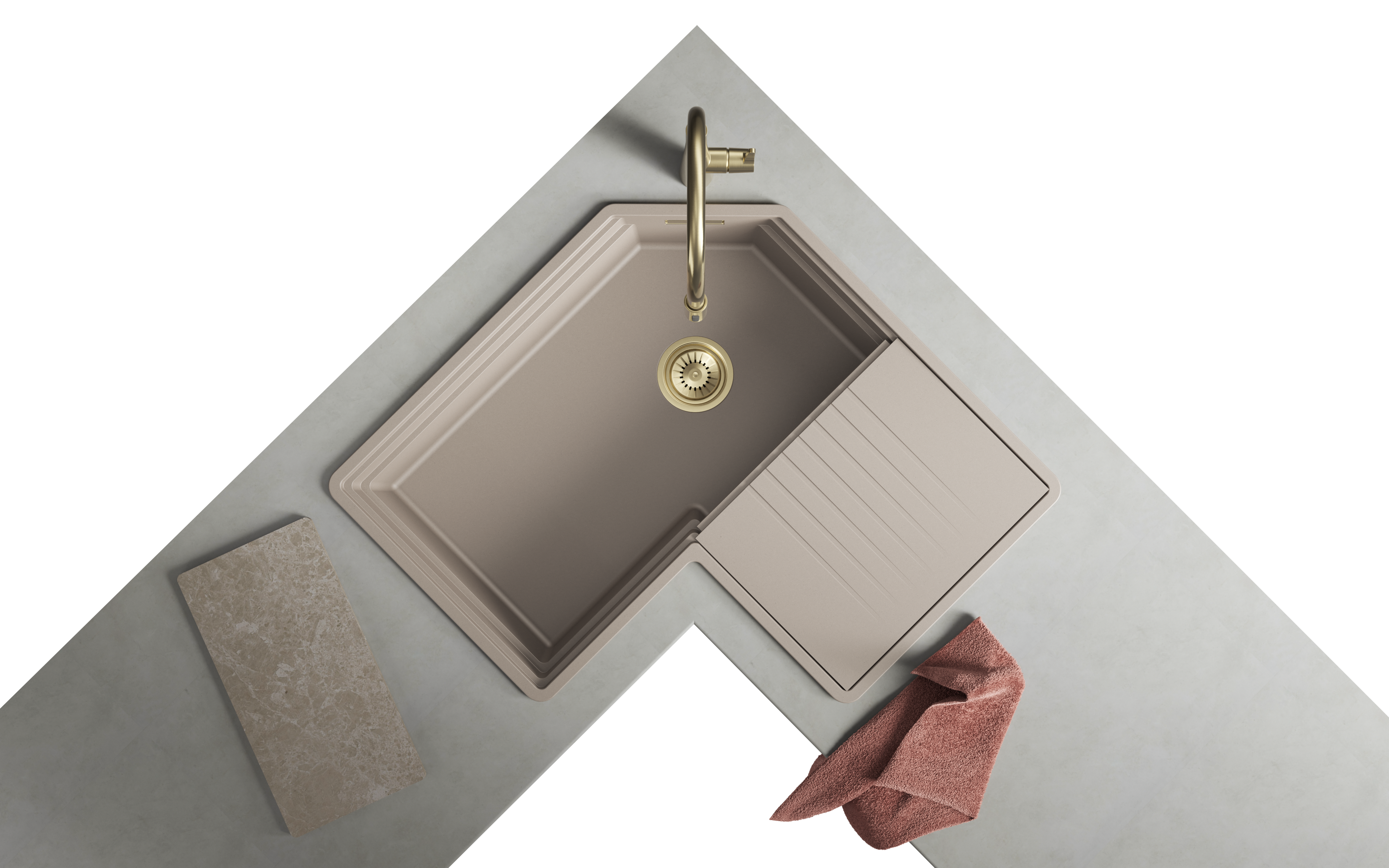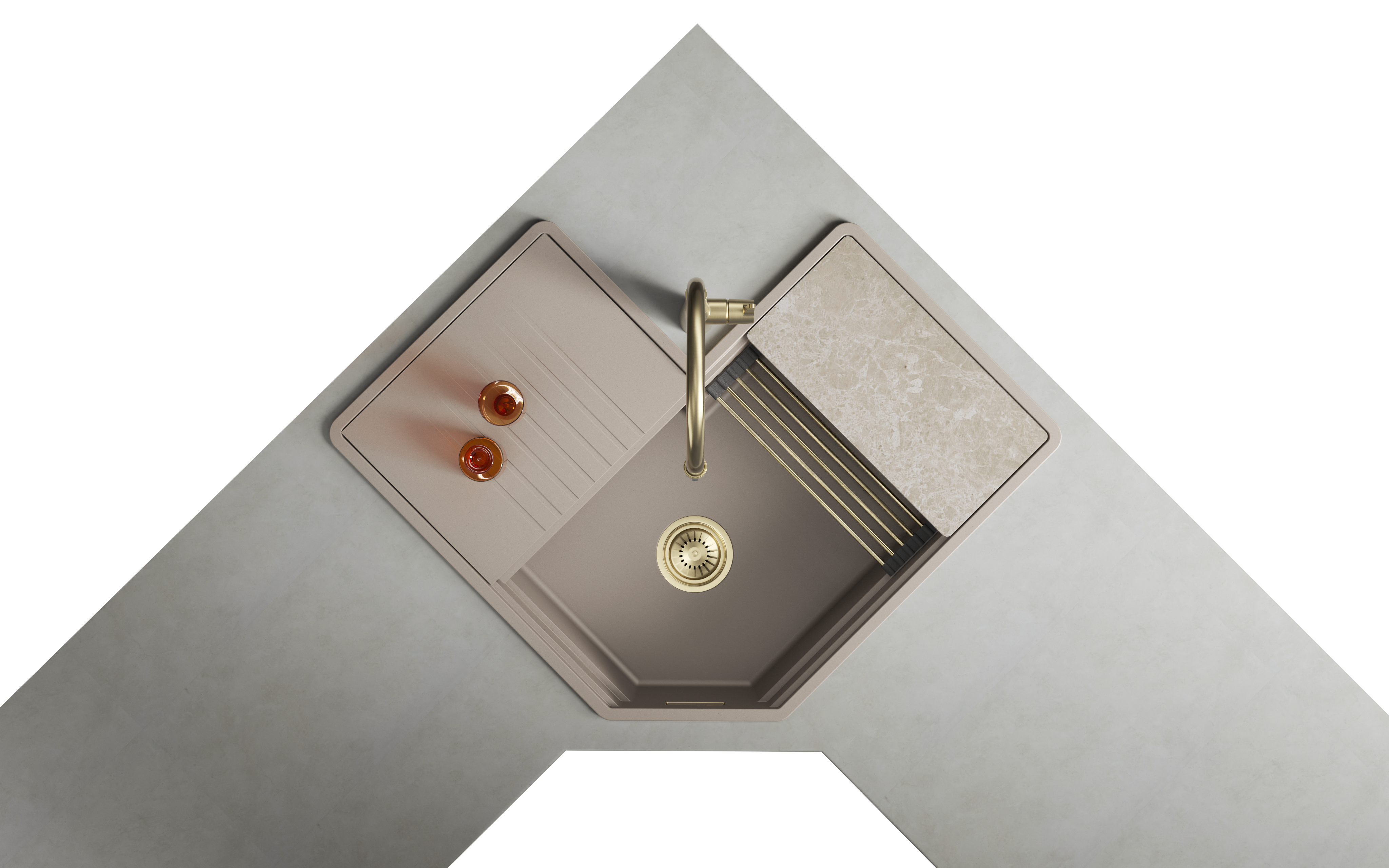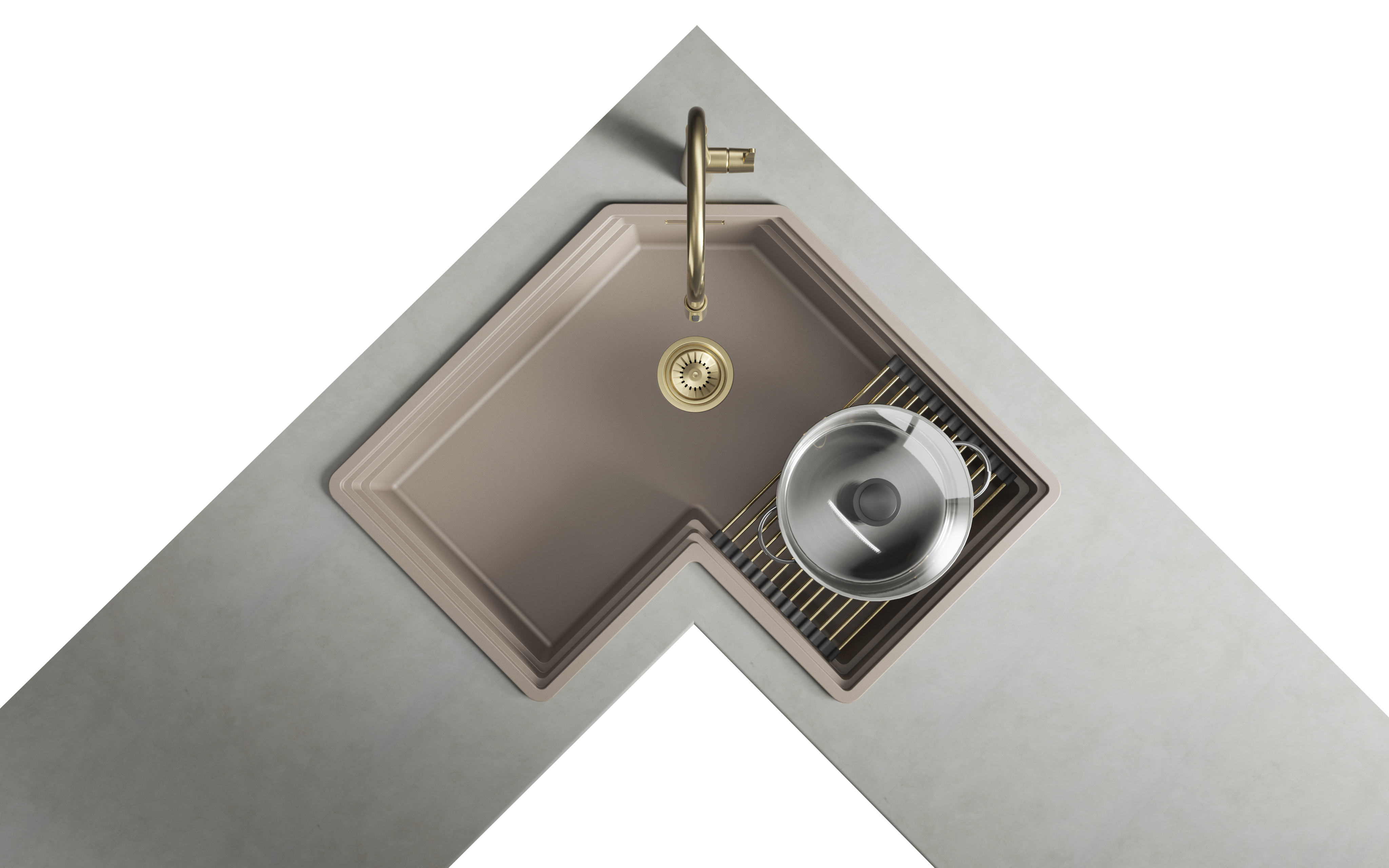


Choosing the right kitchen sink is one of the most important decisions when designing a kitchen. Although stainless steel still has its supporters, today we most often choose composite models, valued for durability, appearance, and everyday comfort of use.
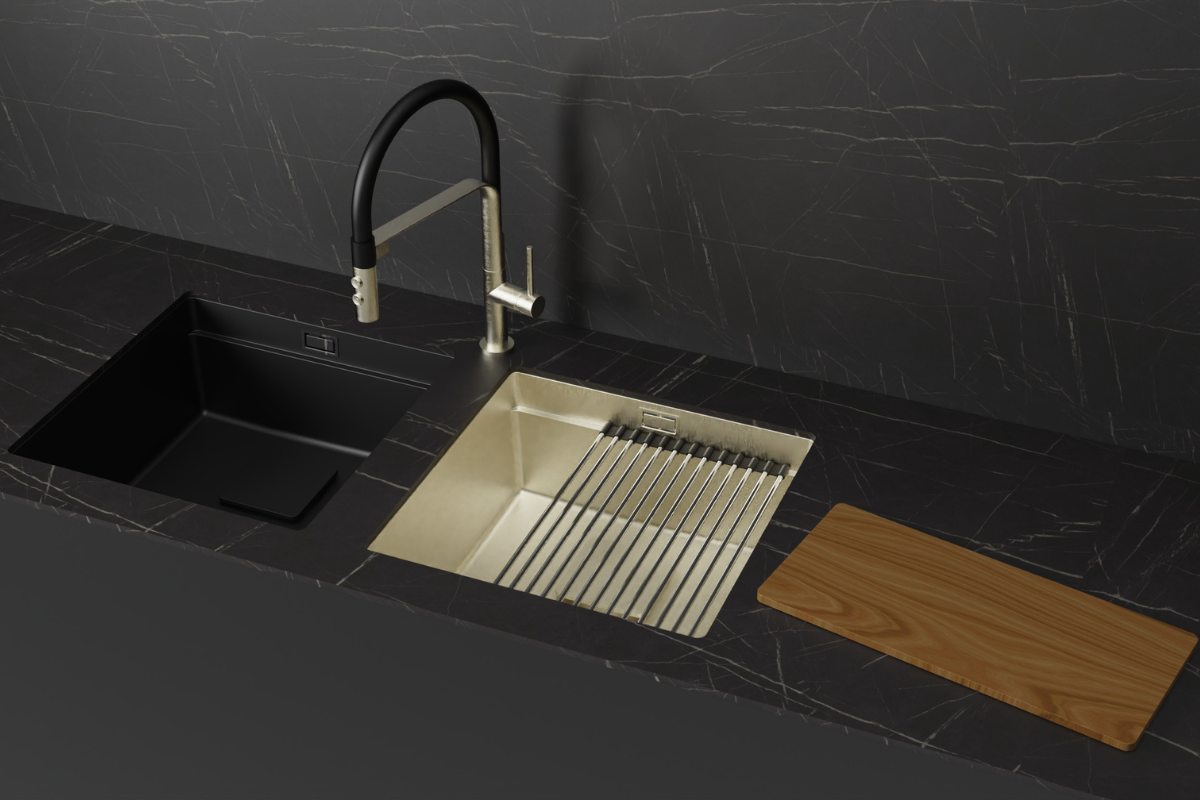
Conglomerate, composite… why the names can be misleading
In sink descriptions you often find different terms: granite sink, composite sink, quartz sink, conglomerate sink. No wonder it leads to confusion, especially since stores use various commercial names.
Where do these misunderstandings come from and what is the material that composite sinks are actually made of?
Sinks are often incorrectly referred to as “conglomerate,” but in reality they are made of a composite, a modern material with significantly higher performance parameters.
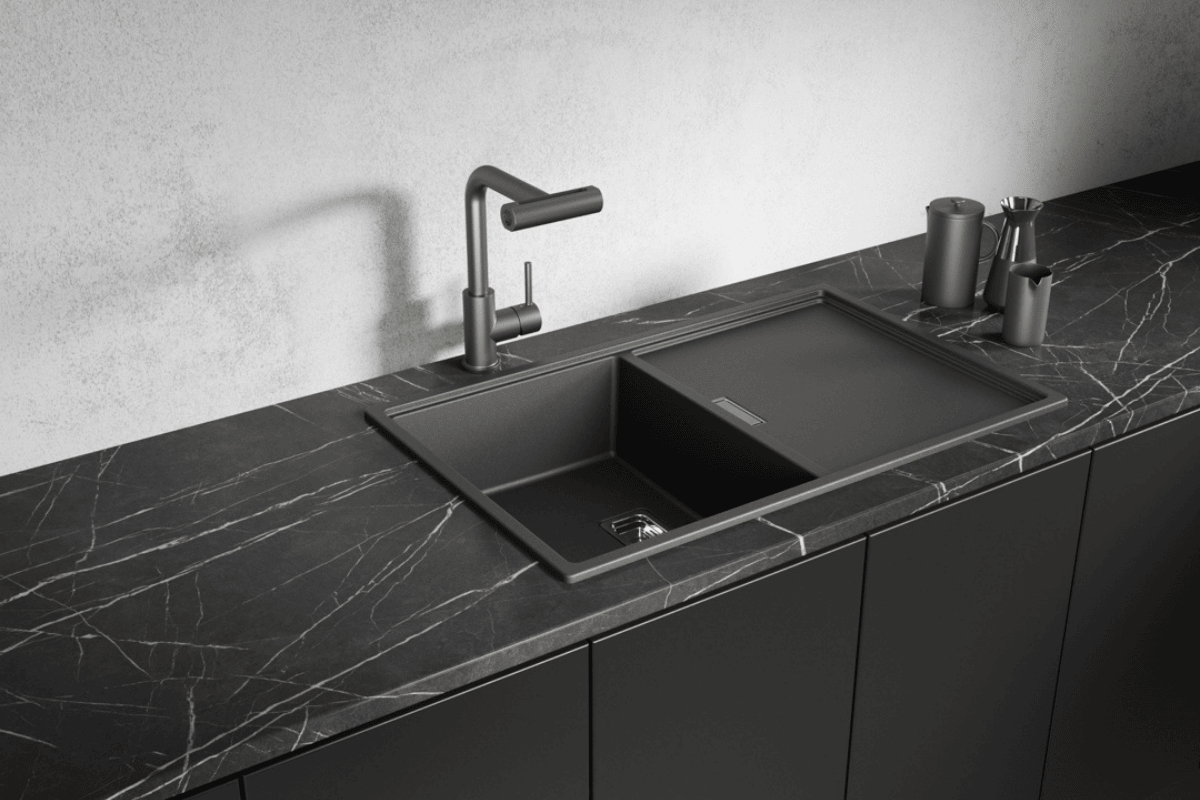
Composite is created by permanently bonding fine mineral particles with high-quality resin, resulting in a uniform, exceptionally durable structure. This process is what gives sinks their resistance to impacts, temperature, scratches, and discoloration.
Conglomerate, on the other hand, is a material with a looser structure, made of larger pieces of aggregate bound together with a binder. It is not as uniform or as strong as composite.
It occurs more often in nature than in manufacturing or technological processes.
That’s why a sink is not conglomerate, it’s an advanced composite designed for top durability, everyday convenience, and aesthetics for years to come.
Granite, quartz: what and when?
Composite sinks are a relatively young product. The first models introduced to the market in the 1970s and 1980s were based on a mix of aggregate and resins. At that time the term “granite” was closer to reality, some manufacturers used granite dust and finely ground rock as a filler.
However, using raw granite came with certain challenges. Granite is a rock with a non-uniform composition (it contains quartz, but also softer minerals such as feldspars and micas), which caused:
- color inconsistency: it was difficult to achieve the exact same shade in every production batch,
- higher porosity: softer minerals could discolor or crumble faster under the influence of household chemicals.
Over time, the industry almost completely switched to quartz sand, which is the hardest and most chemically resistant component of granite. As a result, modern sinks are more durable, and manufacturers can precisely control their color.
Today’s blends sometimes contain a small amount of “granite flour” or granite particles to support the marketing name. In practice, however, premium-class products are made mainly of quartz.
The truth is that modern composite sinks are made from quartz, and the term “granite” refers more to the visual effect and user properties than to an actual content of granite chunks. Unfortunately, in practice the terms “granite sink” and “quartz sink” are now most often used interchangeably.
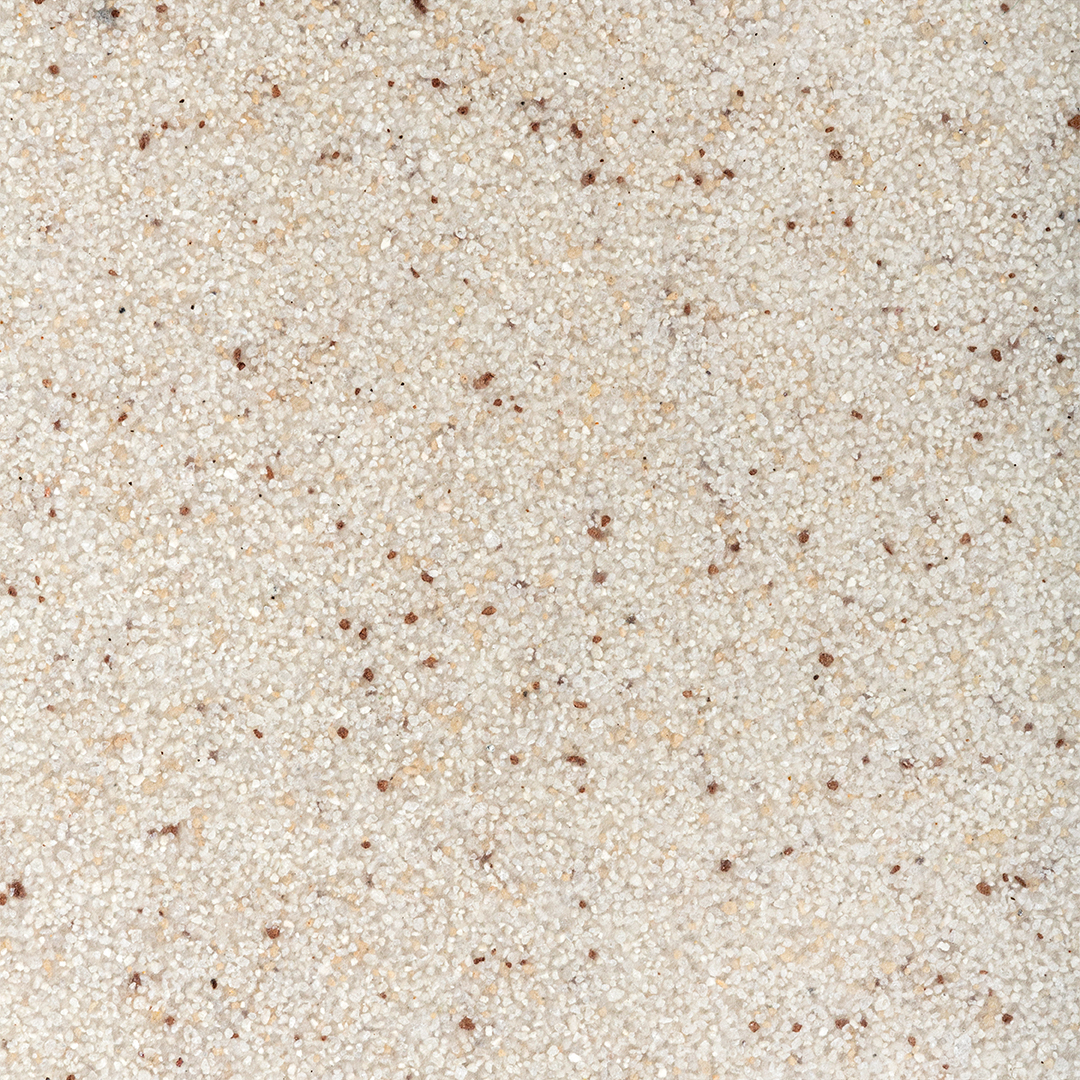
A modern quartz sink is an advanced composite in which natural aggregates dominate, mainly quartz, one of the hardest minerals in nature (7/10 on the Mohs scale).
Why does quartz matter so much?
- provides exceptional scratch resistance,
- strengthens the material structure,
- reduces the risk of mechanical damage, e.g., from heavy pots.
THE BINDER: THE HEART OF SINK QUALITY
In composite sinks, the resin creates a cohesive, dense structure that determines key product parameters: resistance to impacts, high temperature, discoloration, and color durability.
It is the resin’s properties, combined with high-quality aggregate, that form the heart of a sink’s quality.
Working with such a natural material as quartz requires a strictly controlled production process. A properly selected ratio of aggregate to resin and a dedicated molding process make it possible to fully utilize the value of the components and achieve very high strength parameters.
LAVEO quartz-based composite sinks: focusing on hardness and resistance
The best material is not the one with the highest laboratory parameters, but the one that performs well in the real supply chain and everyday use.
With nearly 30 years of experience in producing quartz sinks and 30 years of close cooperation with customers, listening to their needs and feedback, the Laveo brand has developed a resin composition that optimally balances quality parameters, delivering a product with exceptional durability and functionality:
- resistance to impacts and scratches,
- color stability and resistance to staining,
- UV resistance,
- a smooth, low-porosity surface.





What to know before you buy
- Scratch resistance
A quartz sink, thanks to 80% silicon content in the blend and a dense, uniform structure, is highly scratch-resistant. Micro-scratches remain almost invisible because the material is uniformly colored throughout its entire thickness. - Resistance to color change caused by high temperature
Quartz sinks behave similarly to granite countertops or other composite countertops: they are stable, but require some caution.
Tests have shown that a pot at 180°C left for 5 minutes does not cause color changes on Laveo sinks.
However, we recommend using pads, especially at very high temperatures.
- Thermal shock
The material and construction of Laveo sinks have been laboratory tested for large temperature differences. The sink is alternately cooled with cold water (approx. 10°C) and then rinsed with boiling water (approx. 100°C).
This test guarantees that Laveo sinks are resistant to everyday use and safe in contact with hot water.
- Care and impregnation
Composite sinks, like natural stone, benefit from regular surface protection. Impregnation of granite sinks is strongly recommended because it:
- reduces material absorbency,
- makes staining more difficult,
- makes it easier to remove limescale from hard water,
- protects color and extends the product’s lifespan.
It’s a simple step that, when done regularly, truly increases the sink’s durability.
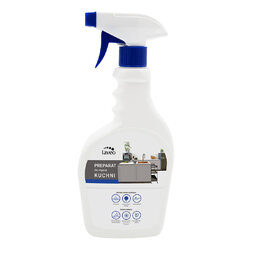
Why do we at Laveo focus on granite sinks?
In the composite sink segment, Laveo focuses on products refined in every detail. We care about every stage of production, from a carefully selected aggregate and resin mix to rigorous quality control in the laboratory. The result is sinks that withstand everyday kitchen challenges while maintaining durability, beauty, and functionality for years. Like natural materials (e.g., granite countertops), with regular care they become reliable, elegant kitchen equipment. These are products that provide comfort, confidence, and daily satisfaction, and Laveo provides a 10-year product warranty.