


At what height should a bath mixer be installed?
Wondering at what height a bath mixer should be installed? The optimum and most commonly recommended distance is 10 to 15 centimetres above the upper edge of the bath. Keeping this clearance makes filling the bath convenient, helps prevent troublesome splashing and reduces the risk of accidentally hitting the mixer body. The final installation dimensions, however, depend on the mounting system selected.
Why does the height of the mixer matter?
Correct positioning of the Spout determines the ergonomics, safety and ease of cleaning of the entire bathing area. If the mixer body is installed too low, access to the temperature controls becomes difficult and users have to lean over the edge of the bath unnaturally. This significantly increases the risk of painfully hitting the back or knees against protruding Brass components, which can be particularly dangerous when stepping into a wet bath, especially for children and older people.
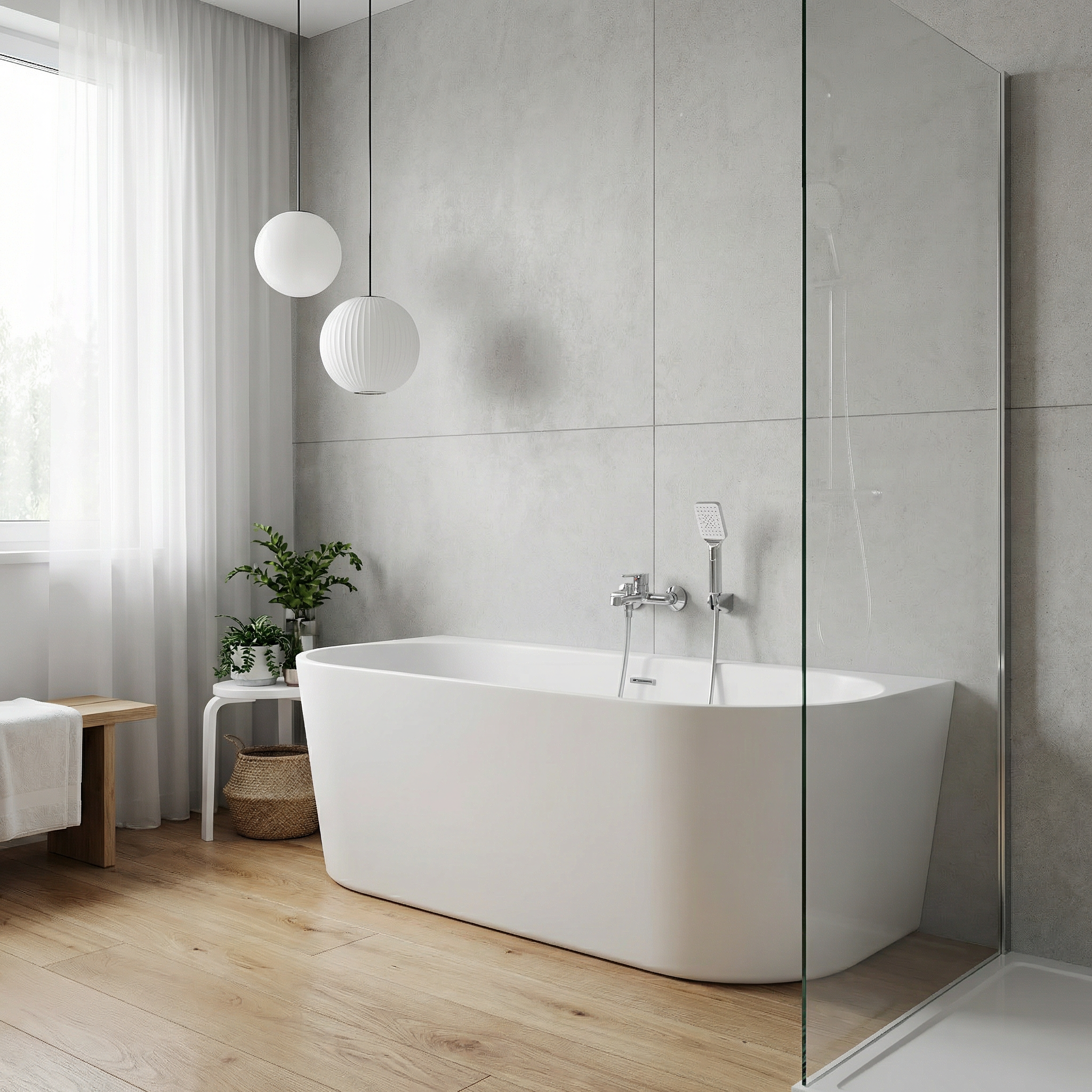
Placing the Spout too high causes a completely different set of practical problems. Water falling over a greater distance hits the bottom with considerable force, splashing onto the surrounding tiles, grout and floor. Household members then need to clean limescale deposits more often, while the likelihood of slipping on a wet floor increases. Water falling from a considerable height also creates unpleasant noise and loses heat more quickly.
A correctly measured distance eliminates these inconveniences. It also allows the mixer escutcheons to align neatly with the grout lines between wall tiles. Harmonising the installation with the tile layout makes the interior look carefully planned and turns everyday care routines into a pleasure.
Standard installation heights for a bath mixer
The most common solution used in homes is an exposed wall-mounted mixer. In accordance with standard installation practice, the lower edge of its Spout should be 10 to 15 centimetres above the bath rim. A bath is usually installed 50 to 60 centimetres above the floor. The mixer body is therefore positioned approximately 60–75 centimetres above floor level. Maintaining these proportions ensures an unrestricted flow and quiet filling.
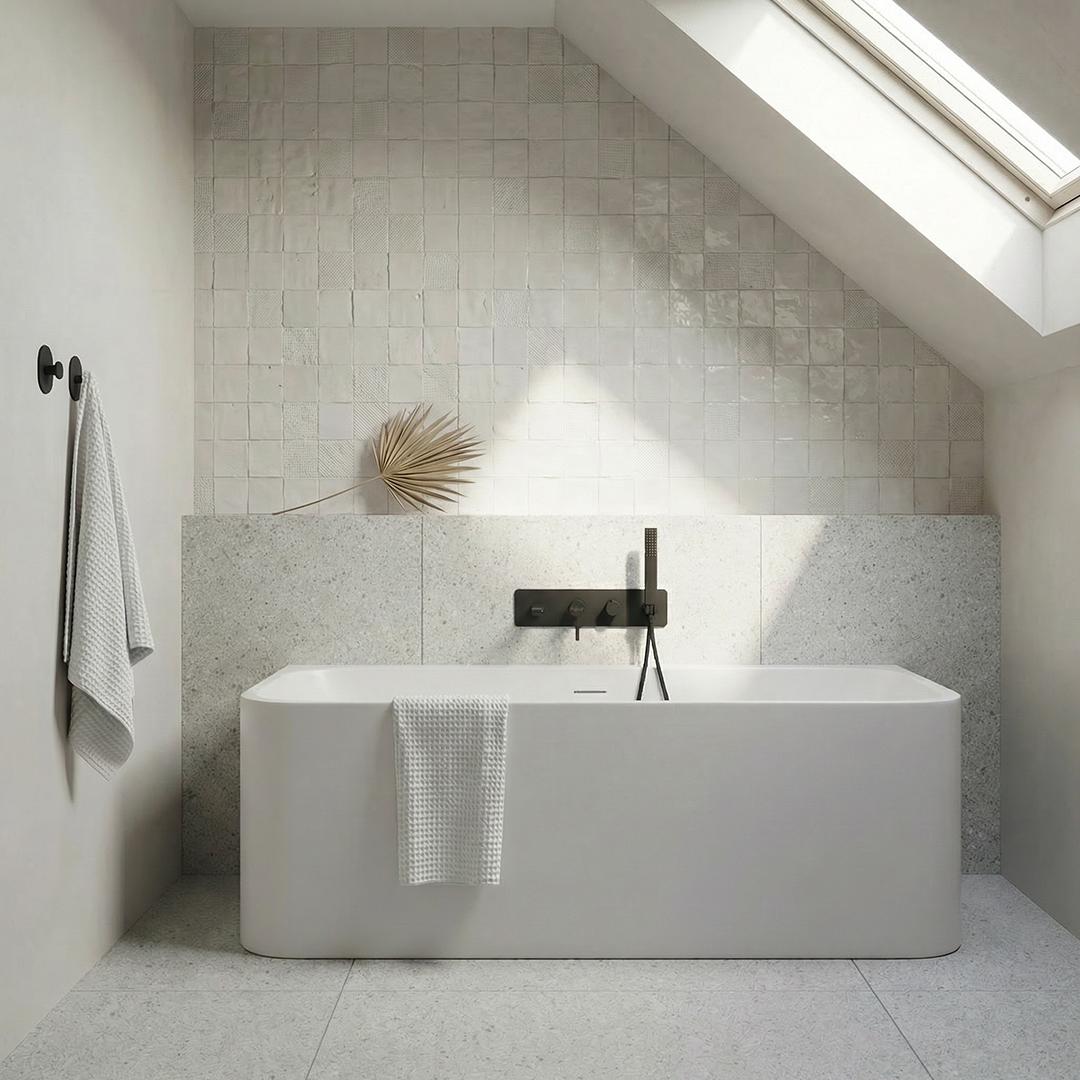
Concealed mixers offer much greater flexibility when designing a bathroom. The Spout that fills the bath must maintain the recommended distance of 10–15 centimetres above the rim. The control escutcheons containing the mixer or thermostat can, however, be placed at a different height or moved slightly to the side of the Spout axis. Separating these components makes it possible to position the controls precisely for the height of household members.
Every manufacturer supplies detailed technical documentation with its products. Before cutting channels into the walls, always read the installation instructions for the selected model. Individual collections may have an unusual aerator angle or a specific Cartridge design, sometimes requiring the universal values to be adjusted by a few centimetres up or down.
How do you install a mixer above a bath?
Installation work begins with accurately marking the water outlet points while the walls are being built or the installation frames are being fitted. When choosing a classic wall-mounted model, the installer must route the hot- and cold-water connections with an exact spacing of 150 millimetres. Minor deviations of a few millimetres can be corrected during the final sanitary installation using the Brass eccentric connectors supplied with the set.
Installing a concealed version requires deeper intervention in the wall structure. Suitable recesses must be cut before the damp-proofing and tiles are installed. The Concealed BOX or Brass concealed body is set into the wall at the depth strictly specified by the manufacturer. The entire system is then pressure-tested. External decorative components, such as handles, shower switches and the long Spout, are fitted only after the ceramic tiles have been fully grouted.
A completely different procedure applies to floor-mounted mixers designed for freestanding baths. The water supply is routed directly through the concrete screed layers, bypassing the walls. The column support frame is secured to the substrate with strong anchors. This requires the base component to be perfectly level and the hydraulic connections to be carefully sealed before the floor is finally finished with boards or porcelain tiles.
Examples of installation heights in different bathrooms
The functional layout of the room and the type of sanitary ware used directly determine the final mixer installation dimensions. The recommendations below cover the most popular bathing-area configurations and replace general tables with specific spatial guidance:
- Classic bathroom with a built-in bath (exposed mixer): position the Spout 10–15 centimetres above the edge. This distance makes it possible to rinse hands under running water, reduces the noise of water hitting acrylic and prevents drops from splashing beyond the outline of the bath.
- Bath with a shower function and screen (concealed system): the Spout remains 10–15 cm above the edge. It is worth installing the control mixer approximately 20–30 cm higher. This provides excellent ergonomics both for a reclining bath and for a quick shower while standing.
- Bathing room with a freestanding bath (floor-mounted mixer): the Spout height is determined by the factory length of the standing column. Before purchase, match the dimensions of the bath to the mixer specifications. Once installed on the floor, the Spout must be approximately 15–20 centimetres above the bath rim.
- Asymmetrical bath (multi-hole deck-mounted mixer): wall installation is not used in this case. Holes are drilled directly into the reinforced rim of the acrylic bath. The only requirement is to route the water-filled angle valves beneath the bath panel at a height of approximately 20–30 cm above the floor.
Choosing a mixer and its installation height
Correctly integrating the mixer body with the sanitary ware affects the reliability of the installation and makes everyday bathroom cleaning easier. The exact mounting point must take account not only of the vertical distance from the bath, but also of the Reach of spout and the angle at which the stream falls. Short-reach models installed too low above a wide, gently profiled bath edge will cause water to run slowly down the inside wall of the bath, making it harder to rinse away dirt and foam quickly.
Durable Bath mixers cast from high-grade Brass are a good choice. Products from the Polish Laveo brand feature optimally profiled spouts and electroplated coatings resistant to deposits. Thanks to the solid construction of their ceramic cartridges, they withstand intensive use while providing smooth control of the flow and temperature.
Regardless of the chosen style, from industrial Black to classic, gleaming Chrome, following the standard installation dimensions allows the purchased equipment to deliver its full functionality. It limits limescale build-up around the escutcheons, makes it easier to control the Hand shower and helps you relax fully during every bath without worrying about flooding the floor.
FAQ – frequently asked questions
What is the standard pipe spacing for a wall-mounted bath mixer?
The standard universal spacing between water connections is exactly 150 millimetres (15 cm). Minor installation errors of up to a dozen or so millimetres can be successfully corrected during fitting with eccentric connectors, which the mixer manufacturer always includes in the set.
Does the mixer Spout have to be installed exactly in the centre of the bath's length?
There is no such building requirement. The position of the mixer depends on the preferences of household members and the design of the bath itself. Installation in the middle of the longer side provides easier access for two bathers and looks very symmetrical. Positioning it at the shorter side, near the feet, makes it easier to operate the controls without entering the bath.
Why does water from my bath mixer splash heavily onto the tiles?
The most common causes are positioning the mixer body too high on the wall, significantly exceeding the 15-centimetre distance from the edge, or excessive operating pressure in the domestic installation. The problem can be partly reduced by replacing the aerator at the end of the Spout with a lower-flow model, which makes the stream denser and calmer.
Is a concealed system more difficult to repair if it fails?
Basic service work, such as replacing the ceramic cartridge or cleaning the check valves, is carried out from the front after removing the external cover plate. The tiles do not need to be removed. Only a cracked internal Brass mounting box presents a serious problem, and this is extremely rare when products from reputable manufacturers are selected.
Is a floor-mounted mixer the only solution for a freestanding bath?
A floor-mounted mixer is the most striking option, but it is not the only one. If the freestanding bath is positioned close to a wall, a classic exposed wall-mounted mixer or Concealed mixer can be installed above it. Simply choose a model with a specially extended Spout, with a minimum reach of 20–25 cm, so that the stream falls directly over the bottom.
Do a bath mixer and a shower mixer have different connection spacing?
No. Both exposed versions use exactly the same pipe spacing: 150 millimetres. The main difference is that models intended exclusively for shower enclosures do not have a lower Spout; they only have a thread for connecting the Hand shower hose.


