


Shower mixer: exposed or concealed?
Choosing a Shower mixer determines the installation method, renovation costs and the final appearance of the bathing area. Wall-mounted models can be installed without disturbing finished tiles, making quick upgrades easier. Versions built into the wall require recesses to be prepared in advance, but offer minimalist design and easy cleaning in return. The comparison below will help you match the mixer to the technical conditions in your bathroom.
Types of Shower mixers
The basic difference between the two types of mixer lies in the position of the main water-mixing mechanism. Depending on the system selected, the Brass body is located outside the wall covering or permanently embedded beneath the plaster. This decision determines the subsequent installation work and how much usable space remains inside the shower enclosure. The two solutions also differ substantially in the construction of the modules that control flow and temperature.
Exposed mixer
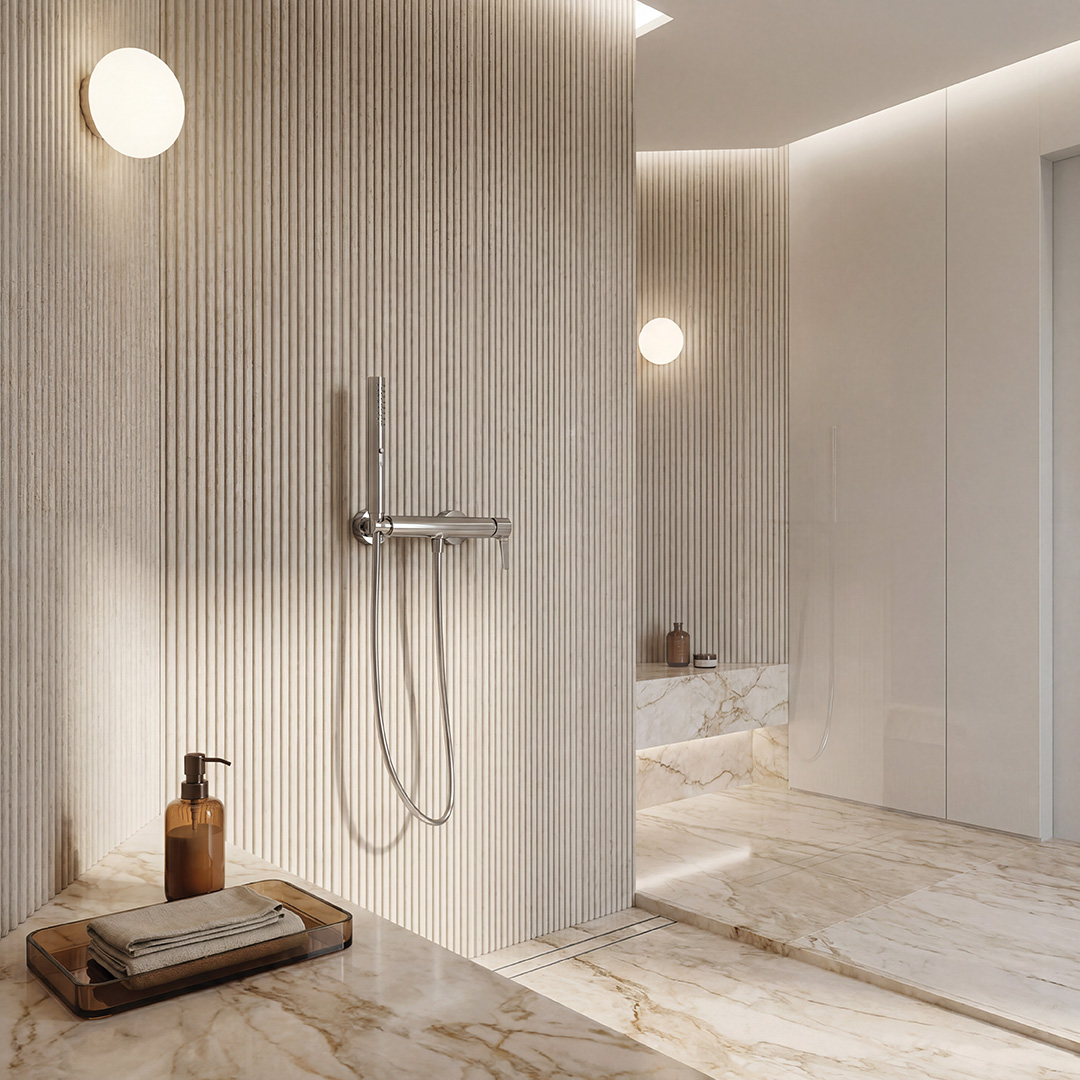
This type of mixer has all its structural elements, including the body, mixing mechanism and connections, exposed on the wall. Classic Shower mixers are attached directly to the hot- and cold-water pipes routed out of the wall. If the ceramic cartridge fails, this design gives the installer immediate access to every component without specialist tools. The external body also makes diagnosis easier if the water pressure in the system drops. Modern models manufactured by Laveo use substantial Brass castings that provide mechanical stability and resistance to fluctuations in the temperature of the water flowing through the system.
Concealed mixer
A concealed system consists of two separate parts: a base element built into the wall and an external escutcheon with a lever and shower diverter. Only the flat control panel and the dedicated water outlets remain visible. These modules normally require a recess 6 to 10 centimetres deep. Their positions must be planned during the shell stage or immediately before new tiles are laid. Hiding the connections beneath the wall covering creates additional space in the bathing area and reduces the risk of accidentally hitting a protruding body while washing.
Comparison of exposed and concealed mixers
Comparing both options makes it easier to assess their suitability for specific building conditions and room sizes. The main distinction is the position of the mixing mechanism. In classic models, the entire installation is outside the wall, while concealed systems hide the Brass body deep beneath the tiles. This directly affects the extent of intervention in the wall structure.
Another important difference is the complexity of installation. External versions can be connected to prepared water connections with standard plumbing tools in several dozen minutes. Built-in modules, however, require laborious wall chasing, pipes to be routed to individual water outlets and precise pressure tests to be carried out before the waterproofing is applied. This significantly extends the renovation schedule.
Space and ergonomics also clearly separate the two types. A protruding body with a traditional mixing mechanism reduces the actual freedom of movement inside the shower enclosure and creates a risk of hitting it with an elbow. Modules hidden in the wall maximise the available space, which is especially important for small shower trays and narrow recesses. For routine care, wall-mounted versions require careful cleaning around threads and connections, whereas concealed versions only require the flat, smooth cover escutcheon to be wiped.
Advantages and disadvantages of different mixer types
Assessing the functionality of both systems requires consideration of initial costs, many years of use and everyday maintenance. Each solution has distinctive technical features that determine its suitability for the size of the enclosure and the scope of the renovation. The decision is not only about appearance. Above all, it is a choice of technology that will affect subsequent servicing, the use of free space in the shower and resistance to deposits from hard water.
Exposed mixer: advantages and disadvantages
The main advantage of wall-mounted versions is non-invasive servicing and the ability to replace the entire unit quickly. If the finish is damaged mechanically or you want to redesign the washing area completely, a new mixer can be fitted in several minutes without removing the tiles. The initial financial threshold is also much lower, including both the cost of the unit and the installer's labour. These designs work very efficiently with classic shower sets fitted to an adjustable vertical Bar.
The main limitation is reduced freedom of movement and more difficult daily hygiene. The body projecting from the wall forms a physical obstacle in narrow enclosures and takes away valuable centimetres of space. In addition, its asymmetrical shape and the many recesses around the eccentric connectors readily collect cosmetic residue and hard limescale. Thorough cleaning of the shower tray therefore takes longer and requires more frequent use of detergents that dissolve calcium deposits. Incorrect care may dull the finish.
Concealed mixer: advantages and disadvantages
Modules hidden inside the wall provide the highest level of minimalism and have become an essential feature of modern interiors. Using Concealed mixers eliminates the problem of hard-to-remove dirt accumulating on exposed pipes because only a flat escutcheon remains to be cleaned. These systems allow the water outlets, such as massage jets or Overhead rain showers, to be positioned freely, making it possible to tailor the bathing area closely to the anatomy and needs of household members.
The limitations of concealed mixers arise directly from the initial installation process and the technical requirements of the building. Deep channels in the wall create a large amount of construction dust, require faultless planning of the pipework and noticeably increase the contractor's fee. Completely reliable components must also be selected. Repairing a cracked Brass body involves removing tiles, so systems fitted with special insulating installation boxes, often called i-boxes, are a prudent choice because they protect the wall against moisture.

Choosing the right Shower mixer
The right mechanism should be selected according to the extent of the planned renovation, the available budget and the size of the bathroom itself. Owners of small flats, where every centimetre recovered inside the shower enclosure improves comfort, will notice a major benefit from a concealed installation. People carrying out only a quick interior refresh and replacing sanitary ware without removing the old tiles need to rely on classic models screwed onto the existing pipe outlets.
Before completing the purchase, check the type of structural walls in the shower area carefully. Thin plasterboard partition walls require dedicated reinforcing frames for the concealed component. This reduces the available space and generates additional material costs. When assessing a specific product, check the Cartridge and the quality of the Finish. Laveo uses thick protective layers that make soap deposits easier to wipe away and effectively protect the Brass core of the mixer against progressive corrosion.
Shower mixer installation
The way in which the plumbing work is carried out is the largest variable in the bathroom finishing process. A wall-mounted model is installed at the very end of the renovation, when the walls are already tiled and grouted. The installer screws eccentric connectors into the threaded outlets in the wall, levels them precisely, fits the cover escutcheons and finally tightens the body with gasket-protected nuts. As no chasing is required, all the work can be completed in under an hour.
Work on a system integrated into the wall requires a strict two-stage schedule. During the shell phase, a correctly sized recess is cut, the installation box is fitted and the pipes supplying water to the Overhead rain shower are securely fusion-welded. The installer must carry out a pressure leak test. Only after confirming that there are no leaks can liquid waterproofing be applied and the tiles installed. The external control escutcheon is fitted only after all wet trades and finishing work have been completed.
FAQ: frequently asked questions
Is every wall suitable for a concealed mixer?
No. Installing a classic installation box safely requires a solid wall at least 10–12 centimetres thick. For thinner plasterboard walls, a suitable reinforcing frame must be used.
What happens if a concealed mixer starts leaking?
Most leaks are caused by wear to the ceramic cartridge, which can be replaced easily from the front after the cover plate has been removed. Removing tiles is a last resort and is only necessary if the body inside the wall has cracked mechanically.
Can an Overhead rain shower be connected to an exposed mixer?
Yes. Ready-made shower columns are manufactured for this purpose and screw directly onto the upper connector of the mixer. An integrated valve on the Bar controls switching the flow between the Hand shower and the upper shower head.
What material should a good Shower mixer be made from?
A solid mixer is based on a cast Brass body, which provides the greatest resistance to pressure fluctuations and corrosion. A ceramic mixing cartridge is also essential to ensure tightness and smooth operation of the handle.
What is the standard pipe spacing for an exposed mixer?
The standard Shower mixer spacing, meaning the distance between the centres of the connection threads, is exactly 150 mm, although eccentric connectors allow the spacing to be adjusted slightly.


