


Which hand shower should you choose?
A well-chosen hand shower provides a comfortable water stream, freedom of movement and easy operation while bathing. Before purchasing, check the number of shower modes, water flow, how the streams are switched and the protection against limescale build-up. The shape of the head, hose length and fixing type are also important. We explain how to assess each solution and match the hand shower to the household's needs and the existing mixers.
What affects everyday showering comfort?
Comfort when using a hand shower depends mainly on how the water is distributed, the ergonomics of the handle and the ability to direct the stream freely. Even a model with several features may prove uncomfortable if its handle is too heavy, slippery or awkward.
When comparing hand showers, pay attention to the size and shape of the shower head. Models with a larger faceplate can cover a larger area of the body, while smaller heads make it easier to direct the water precisely, for example when washing hair, bathing a child or rinsing the shower tray. Size alone does not determine shower intensity. Nozzle arrangement and the amount of water flowing through them are also important.
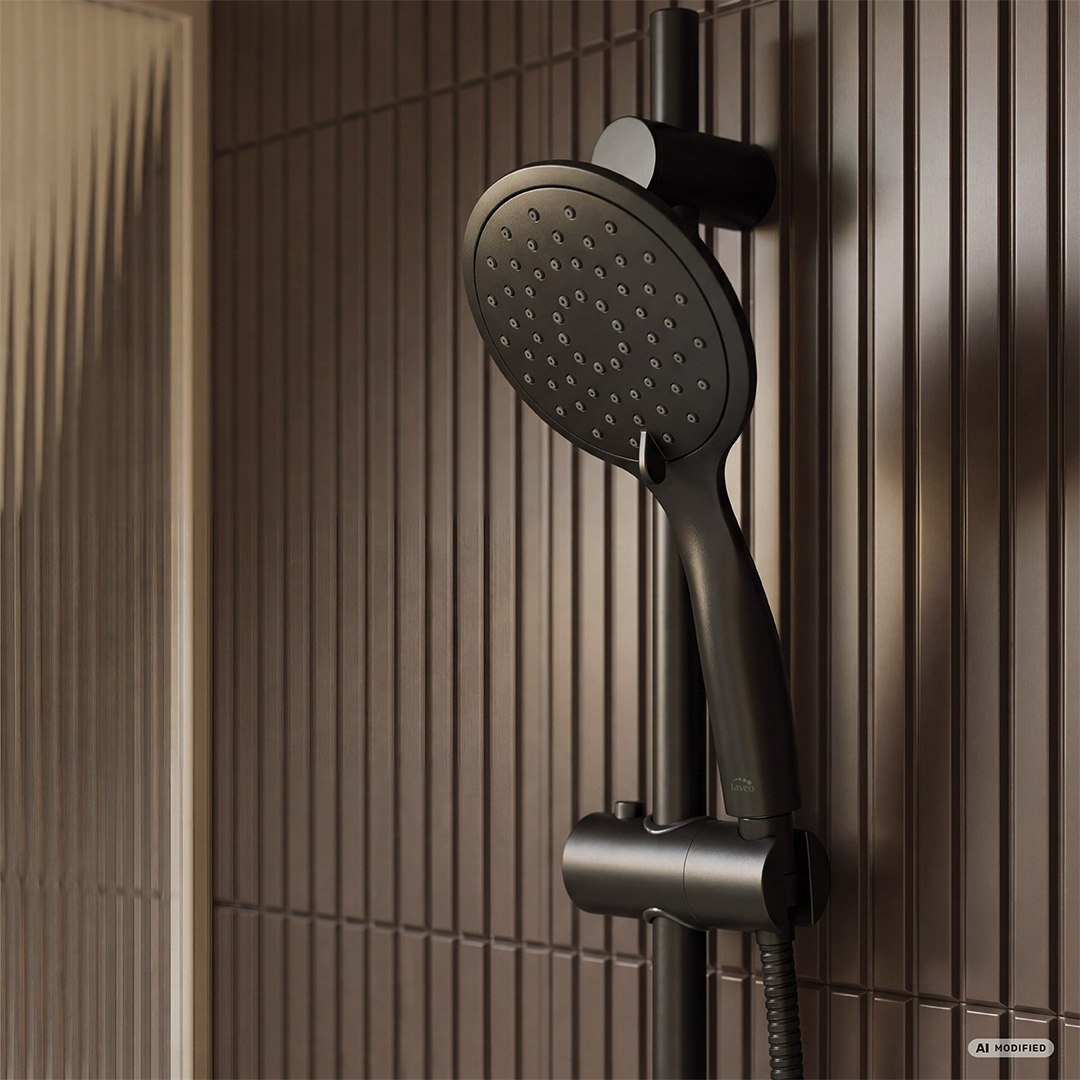
The handle design is equally important. If the hand shower will often be used outside the bracket, check whether:
- its weight does not tire the hand during prolonged use;
- the handle surface provides a secure grip even when wet;
- the handle shape makes it comfortable to direct the stream;
- the head does not catch on the shower enclosure walls when turned;
- the hand shower remains stable in the existing bracket.
The water pressure in the installation is also important. At low pressure, some shower modes may operate less intensively, so check the requirements of the specific model before purchasing.
Types of hand showers
Hand showers differ mainly in the number of available streams, the size of the faceplate and how they are operated. A single-stream model is usually sufficient for everyday bathing, while people who use different shower types may appreciate a multi-function hand shower.
- Single-stream hand showers provide one consistent shower type. They do not require mode switching, making them simple to operate and suitable for people who do not need additional features.
- Multi-function hand showers allow the stream characteristics to be changed, for example from a gentle Rain stream to a more concentrated one. They are a good solution in bathrooms used by several household members with different preferences.
- Hand showers with an enlarged faceplate distribute water over a larger area of the body. They provide a wide shower, although its intensity depends on nozzle arrangement, water flow and pressure.
- Water-saving hand showers feature solutions that limit the flow. They can reduce water consumption while bathing, although the declared flow and required working pressure should be checked before purchasing.
Individual features can be combined. A multi-function hand shower may also have a flow restrictor and a system that makes limescale easier to remove.
The range of Laveo hand showers includes models in various shapes, finishes and numbers of streams. When comparing products, consider the specific features because a similar appearance does not mean identical operation.
A hand shower can be replaced separately without purchasing a complete set, provided that the connections are compatible. However, if you also plan to replace the mixer, overhead rain shower or fixing method, it is better to consider all shower components as one system. This helps avoid problems matching individual parts.
How should you choose a hand shower?
Before purchasing a hand shower, check its compatibility with the existing installation, the range of available features and the convenience of everyday operation. The most expensive or most elaborate model is not always right for a particular bathroom.
The first consideration is the connection type. A G1/2 thread is used in most domestic installations, but its compatibility with the existing hose must be confirmed before replacement. Also check the shape of the handle end, especially if you intend to keep the current wall bracket.
Next, assess the operating parameters. Consider the declared water flow, number of streams, how the features are switched and whether the nozzles can be cleaned. If low pressure is a problem in the bathroom, check the water supply requirements of the hand shower.
Only after assessing functionality should you match the finish to the other mixers. Chrome is versatile and easy to combine with most mixers. Black, Graphite or Gold surfaces create a coordinated look but may require particular care. Cleaning should always follow the manufacturer's recommendations for the specific coating.
Stream types
A hand shower with several stream types can be adapted to different activities, from quickly rinsing shampoo to a relaxing shower. Individual modes differ in the arrangement of active nozzles, the character of the water flow and shower intensity.x

The most common stream types are:
- Rain – water flows through many openings to create an even shower. It is suitable for everyday washing of the whole body.
- Massage – a more concentrated stream gives a more intensive sensation as the water contacts the skin. It can be pleasant for briefly showering the neck or back.
- Mixed – combines the characteristics of two stream types, such as Rain and Massage, to provide both a wider and a more concentrated flow.
- Water mist – a finely dispersed shower feels gentler on the skin, although its suitability for quickly rinsing products depends on the hand shower design.
Not every multi-function hand shower offers all the listed modes. Stream names and their operation may vary between manufacturers.
When purchasing, consider whether you will actually use the additional features. If an even shower is your main priority, a good single-stream model may be sufficient. When several people use the bathroom, changing the intensity and character of the stream provides greater flexibility.
Riser rail or wall bracket?
A shower riser rail is best when the shower is used by people of different heights, while a single wall bracket is sufficient if the position of the hand shower does not need frequent adjustment.
A riser rail allows the fixing to move vertically and, depending on the bracket design, also allows the head angle to be adjusted. This makes it easier to direct the stream to the right height without holding the hand shower. Before purchasing, check that the adjustment mechanism works smoothly and holds the selected position securely.
A single-point wall bracket takes up less space and has a simpler design. It is particularly suitable above a bath or in a small enclosure. Its limitation is a fixed installation height, so the position must be determined with the users' heights in mind.
If you are also replacing the hose and fixing, you can choose ready-made shower sets, in which the individual parts are already matched.

Another option is shower columns equipped with an overhead rain shower and a hand shower. They provide two ways to use the shower, but the installation options and compatibility with the plumbing must be checked.
Shower hose – how should you choose the length and material?
A shower hose should allow the hand shower to be used freely without straining, bending or pulling on the connection. A hose that is too short restricts movement, while one that is excessively long may tangle around the legs or rest on the shower enclosure floor.
Hoses with a length of 150 cm are commonly used. In larger enclosures, with a high-mounted hand shower or when bathing in a bath, models measuring 175–180 cm may be useful. Extendable hoses that increase in length during use are also available.
The best way to determine the length is to measure the distance from the mixer to the bracket and check that the hand shower reaches every place where it will be used. Also allow enough extra length to turn the handle comfortably.
The material is important. Individual solutions differ in their care requirements and behaviour during use:
- Metal hoses – often feature flexible Stainless steel braiding. Check the quality of the end fittings and whether the metal cover may come into contact with the bath surface.
- PVC hoses – have a smooth surface that is easy to wipe. They may be convenient in bathrooms with acrylic baths because they do not have metal braiding.
- Silicone hoses – are flexible and have a smooth surface. Before purchasing, check the specific model's resistance to kinking.
Another useful solution is the hose anti-twist system, which limits hose twisting when the hand shower is turned. It is particularly useful for people who frequently use the hand shower outside its bracket.
When comparing shower hoses, check the connection type, length, material and presence of a hose anti-twist system. A well-matched hose should hang freely when the hand shower is returned to its bracket and should not strain the mixer connection.
Button or ring?
A button on the handle makes it easier to change the stream with one hand, while a rotating ring switches features by turning part of the shower head.
A button is convenient for people who frequently change modes while bathing. There is no need to move the hand shower to the other hand or turn the faceplate. Before purchasing, check that the button is within thumb reach and does not require considerable force.
A rotating ring, usually positioned beside the faceplate, changes the stream type by turning the mechanism. Some models require the hand shower to be held with the other hand, particularly when the ring provides greater resistance.
In both cases, smooth mechanism operation is important. A switch that is too stiff may be difficult to use with wet hands, especially for children and people with limited finger mobility.
If you can view the product before purchasing, it is best to check the mechanism in person. The number of features alone does not indicate whether they will be convenient to operate.
Why choose a water-saving hand shower?
A hand shower with a flow restrictor can reduce water consumption without shortening bathing time. However, the savings depend on the actual amount of water flowing, the installation pressure and how the shower is used.
Flow is measured in litres per minute (l/min). The less water that flows in the same period, the lower the consumption. The difference is best illustrated by comparing two hand showers with flow rates of 12 l/min and 8 l/min.
During a ten-minute shower, a hand shower with a flow rate of 12 l/min will use 120 litres of water, while a model with a flow rate of 8 l/min will use 80 litres. This saves 40 litres during one shower. Over 30 such showers, consumption will be 1,200 litres, or 1.2 m³, lower.
These are example values, not the parameters of specific products. Actual consumption depends on the flow in the installation and how long the water is running.
Some hand showers use flow restrictors, while others use specially shaped nozzles or solutions that aerate the stream. The method matters because a lower flow does not always produce the same perceived shower intensity.
When purchasing, look for information about water flow at a specified pressure, rather than relying only on an ‘eco’ or ‘water-saving’ label. Excessive flow restriction can make products more difficult to rinse away and may prevent some instantaneous water heaters from starting.
The approximate flow of an existing hand shower can be measured by collecting water in a container for 15 seconds and multiplying the number of litres by four. Take the measurement with the mixer set as it is during bathing. This makes it easier to assess whether replacing the hand shower will actually reduce water consumption.
Protection against limescale – what should you consider?
A hand shower with flexible nozzles and an Anti-Calc system makes limescale deposits easier to remove. These deposits form when surfaces come into contact with hard water. Contaminated openings can cause an uneven shower, change the flow direction and gradually restrict the stream.
Systems described as Anti-Calc usually use flexible projections, for example made of silicone. Deposits on their surface can generally be removed by rubbing gently with a finger. This makes cleaning easier without dismantling the entire hand shower.
However, it is important to distinguish easy limescale removal from complete prevention of its formation. Even a hand shower with an Anti-Calc system requires regular care, especially in installations with hard water.
When purchasing, check that the nozzles are accessible for cleaning and that the manufacturer permits deposits to be removed without dismantling the head. Also consider the faceplate design. Numerous small openings may require more thorough care if the water contains many minerals.
For everyday cleaning, use a soft cloth and a product approved by the manufacturer. Do not use sharp tools to clear the nozzles or harsh descaling agents without checking their compatibility with the hand shower material and coating.
If individual streams begin to flow at a different angle or some openings stop working, first try to remove the deposits. This does not always mean that the entire hand shower needs replacing.
Installing and maintaining a hand shower
Replacing the hand shower alone usually does not require tools or work on the plumbing. In most standard sets, it is sufficient to unscrew the old head from the hose and attach the new one, provided the threads are compatible.
Before installation, turn off the mixer and make sure no water flows from the hose. Then unscrew the existing hand shower and check the condition of the rubber washer in the connection nut.
If the washer is cracked, deformed or damaged, replace it with a suitable one. Screw on the new hand shower by hand without using excessive force. A standard connection with a washer does not require additional sealing with PTFE tape.
After installation, turn on the water and check the connection for leaks. If a leak appears, check the washer position, thread compatibility and nut tightness again. Correct the connection as necessary without overtightening the components.
During continued use, monitor the condition of the hose and connections. Cracks in the cover, leaks at the ends or permanent kinks may indicate that the hose needs replacing.
Wipe the hand shower surface regularly with a soft cloth and remove excess water after bathing. This limits water marks and makes it easier to maintain the attractive appearance of the coating.
At what height should a hand shower be installed?
The hand shower installation height should suit the users' heights and how the shower is used. For a bracket intended for standing showers, an installation height of approximately 180–200 cm above the finished floor is common, but the final position depends on the set design and household needs.
A hand shower positioned too low can make hair washing difficult and direct the stream over a small area of the body. A bracket installed too high will be inconvenient for shorter people, who may have difficulty reaching the handle freely.
When determining the height, also check the hand shower angle. The stream should reach the bathing area without excessive water splashing outside the enclosure.
If several people use the shower, a height-adjustable riser rail is the most convenient option. It allows the shower position to be adjusted without drilling additional holes in the tiles.
Do not confuse the height of the hand shower bracket with the mixer installation height. These are two separate dimensions that must be considered when planning the installation.
A shower for older people and people with disabilities
For older people and users with limited mobility, a lightweight hand shower with a comfortable handle, easy controls and height adjustment works best. This solution reduces the need for uncomfortable movements while bathing.
A model with a stream-change button in the handle may be particularly useful. If it requires little pressure, the user does not need to turn the head firmly or use both hands. However, make sure the button is genuinely easy for the particular person to press.
Hose length is also important. It should allow the shower to be used freely from a seated position but must not form loops that obstruct movement. Models with a hose anti-twist system can help reduce tangling.
Bathrooms adapted for people with limited mobility should also include:
- a hand shower bracket accessible from standing and seated positions;
- a riser rail with an adjustment mechanism that does not require considerable force;
- a slip-resistant floor surface;
- properly installed grab rails that help maintain balance;
- easy access to water temperature and flow controls.
Neither the hand shower bracket nor an ordinary shower riser rail should be used for support when standing up unless the manufacturer expressly intended this use. Properly selected and installed grab rails are required for this purpose.
A thermostatic mixer can complement the equipment by helping maintain the selected water temperature and limiting the risk of sudden temperature changes while bathing.
When designing such an area, the most important consideration is to adapt the height, controls and equipment layout to the user's actual abilities rather than only to standard installation dimensions.
FAQ – frequently asked questions
Does every hand shower fit every hose?
Most hand showers and shower hoses use a standard G1/2 connection, but this does not mean that all models are fully compatible. Before purchasing, check the thread type and whether the handle fits the existing bracket.
Does a water-saving hand shower reduce pressure?
A flow restrictor reduces the amount of water flowing but does not necessarily lower the pressure in the installation itself. The perceived shower intensity depends on nozzle design, available pressure and flow.
Which hand shower works with low water pressure?
At low pressure, look for a hand shower whose manufacturer declares that it operates under these conditions. Also check the hose condition and nozzle cleanliness because a kink or blockage may further restrict the flow.
Does a larger shower head mean a stronger stream?
No. A larger faceplate may distribute water over a wider area, but stream intensity also depends on the number and design of the nozzles and the installation parameters.
Why does a hand shower drip after the water is turned off?
Brief dripping often results from water remaining inside the hand shower and hose draining away. If the leak continues, check the mixer and its shut-off mechanism for leaks.
Can a hand shower be installed with a bath mixer?
Yes, if the bath mixer has a suitable hose connection and a function for switching the water flow to the shower. The hose length and bracket position must also suit how the bath is used.
When should a shower hose be replaced?
Replace the hose when leaks, cracks in the cover or permanent damage to the connections appear. A loss of flexibility and frequent kinking can also make the shower difficult to use.
Can only the hand shower in a shower column be replaced?
In many shower columns, the hand shower can be replaced without dismantling the other parts. Before purchasing, check thread compatibility, the fixing method and the set manufacturer's requirements.


